
Roger Küng
Head of Operations EnergyCuringRAHN AG

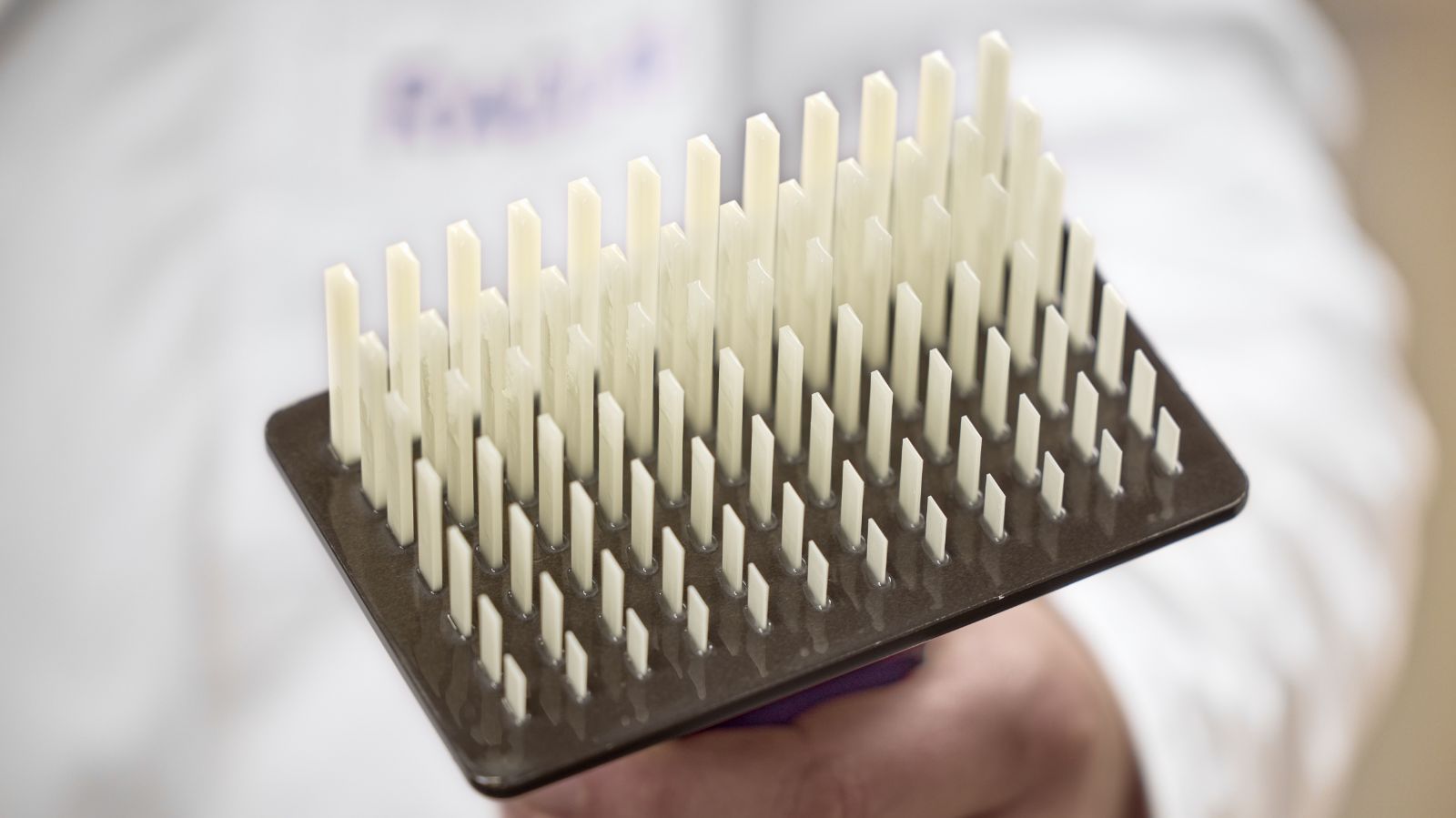
Biocompatible resins are formulated to safely interact with living tissue without causing toxic, allergic, or inflammatory reactions. In 3D printing, this means both the material composition and printing process must ensure that the final part can be safely used in medical, dental, or wearable applications.
Biocompatible resins are materials that are designed to be compatible with living tissues and biological systems. It's crucial to note that the term "biocompatible" doesn't imply a one-size-fits-all characteristic.
The term “biocompatible” therefore depends on:
RAHN develops and supplies raw materials that enable formulators to create 3D printing resins capable of achieving these high-performance and safety standards.

To truly appreciate the value of biocompatible resins, it’s important to understand what biocompatibility means in a 3D printing context. According to ISO 10993-1, biocompatibility is defined as: "The ability of a medical device or material to perform with an appropriate host response in a specific application." In practical terms, this means that a biocompatible 3D printing material must integrate seamlessly into its intended application without causing adverse effects. It’s a common misconception that biocompatibility means "completely risk-free." Instead, it signifies that the material has been rigorously tested and deemed safe within specific usage conditions Several key factors determine the biocompatibility of 3D printing resins, including:
With advancements in 3D printing technology, modern biocompatible resins are offering unmatched precision, durability, and safety. These materials are playing a pivotal role in dental aligners, surgical guides, and patient-specific implants, transforming the way healthcare professionals approach personalized treatments. By leveraging high-quality biocompatible 3D printing materials, manufacturers can enhance product safety, streamline production, and contribute to groundbreaking medical innovations
The growing demand for biocompatible resins in 3D printing for medical and dental applications highlights the importance of meeting strict industry standards. These materials are specifically formulated to ensure safety, reliability, and long-term performance, making them ideal for medical implants, dental prosthetics, and other healthcare applications.
As 3D printing continues to revolutionize the medical field, ensuring biocompatible resins meet evolving safety and performance expectations is essential. Responsible manufacturers are already taking steps to enhance transparency, refine certification processes, and provide high-quality materials that support innovative and life-changing applications
Even a well-formulated resin can lose its biocompatible properties if not processed correctly. Post-processing ensures that all reactive components are fully cured and that the printed part is safe for contact with biological tissue.
Key post-processing steps include:
RAHN’s photoinitiators and oligomers are optimized for high conversion efficiency, enabling resins that achieve stable biocompatibility after printing and curing.
The following section describes applications, which are made of biocompatible resins.
Biocompatible materials play a pivotal role in various dental applications, ensuring compatibility with oral tissues and minimising adverse reactions.
Dental Splints: Night guards are often used to alleviate issues like teeth grinding and jaw clenching and benefit from biocompatible resins or thermoplastics. These materials not only provide comfort but also reduce the risk of irritation or allergic reactions in the delicate oral environment.
Hybrid dentures: Incorporating both traditional and modern materials, hybrid dentures utilise biocompatible polymers and metals for their base structures. These materials offer durability and compatibility with oral tissues, enhancing patient comfort and long-term wearability.
Ceramic crowns: Praised for their natural appearance and biocompatibility, ceramic crowns are commonly used to restore damaged or decayed teeth. Their ability to mimic natural tooth enamel while seamlessly integrating with surrounding tissues makes them a preferred choice in restorative dentistry. In advanced dental workflows, ceramic resin 3D printing enables highly precise ceramic components with excellent surface quality and reproducibility.
Biocompatible materials are used in a myriad of medical applications, ensuring compatibility with the human body and facilitating safe and effective treatments.
The integration of biocompatible materials and 3D printing technology has led to new wearable applications, like various 3D-printed wearable devices, that prioritise user comfort, safety, and functionality.
Several 3D printing methods can be employed to create biocompatible products. Stereolithography (SLA), Digital Light Processing (DLP) as well as Material Jetting belong to the most popular printing methods.
Advancements in additive manufacturing continue to push the boundaries of what is possible with biocompatible 3D printing materials.
Future developments are focused on enhancing safety, sustainability, and performance. Emerging trends include:
RAHN continues to invest in R&D to support these trends, developing high-performance raw materials that combine functionality, processability, and compliance for the next generation of biocompatible resins
Creating medical products requires thorough research to pass all legal requirements. RAHN supports you during the entire process to create valuable and competitive products. Contact us to find out more about our raw materials for 3D printing and a wide range of other industries.
A resin is biocompatible when it can safely interact with living tissue without causing harmful reactions. This is confirmed through standardized biological testing of the final printed and cured part.
RAHN supplies high-purity monomers, oligomers, and photoinitiators, and offers formulation expertise to help partners develop resins that meet medical and regulatory requirements.
Compatibility depends on the resin chemistry and curing mechanism. RAHN’s materials are designed to support a range of photopolymerization technologies used in medical and industrial 3D printing.
No. Only the fully processed and cured part can be certified. Individual components can support biocompatibility, but certification depends on the final product and its intended use.
PLA (Polylactic Acid) is generally considered biocompatible and is widely used in biomedical applications such as implants, sutures, and tissue engineering scaffolds. However, its biocompatibility must still be verified for each specific printed part and application.
PLA is among the least toxic materials for 3D printing. It is derived from renewable resources and emits minimal fumes compared to other thermoplastics. For resin-based systems, low-monomer-content and well-cured biocompatible formulations offer the safest options.
RAHN AG